
Bioregional Regeneration
A bioregion is an area defined not by political boundaries, but ecological or geographic ones. We connect our mission to projects and partnerships aimed at regenerating our bioregion, the Miami Valley of Ohio.
“Bioregioning involves listening to the land, learning from its stories, and engaging in practices that align human activities with the ecological and cultural rhythms of a place. It is a participatory act, requiring collaboration to map the layers of stewardship, recognize the flows of energy and resources, and build systems of care and reciprocity that honor both human and non-human inhabitants. At its core, bioregioning is about creating a living practice of place-based connection, ensuring that the decisions we make today contribute to a regenerative future for the landscapes we call home” - Brandon Letsinger
What is Bioregionalism?
“Simply put, bioregionalism means learning to become native to place, fitting ourselves to a particular place, not fitting a place to our predetermined tastes. It is living within the limits and the gifts provided by a place, creating a way of life that can be passed on to future generations.” —Judith Plant
Bioregional regeneration is both a philosophical framework and a way to think about the scale of our work.
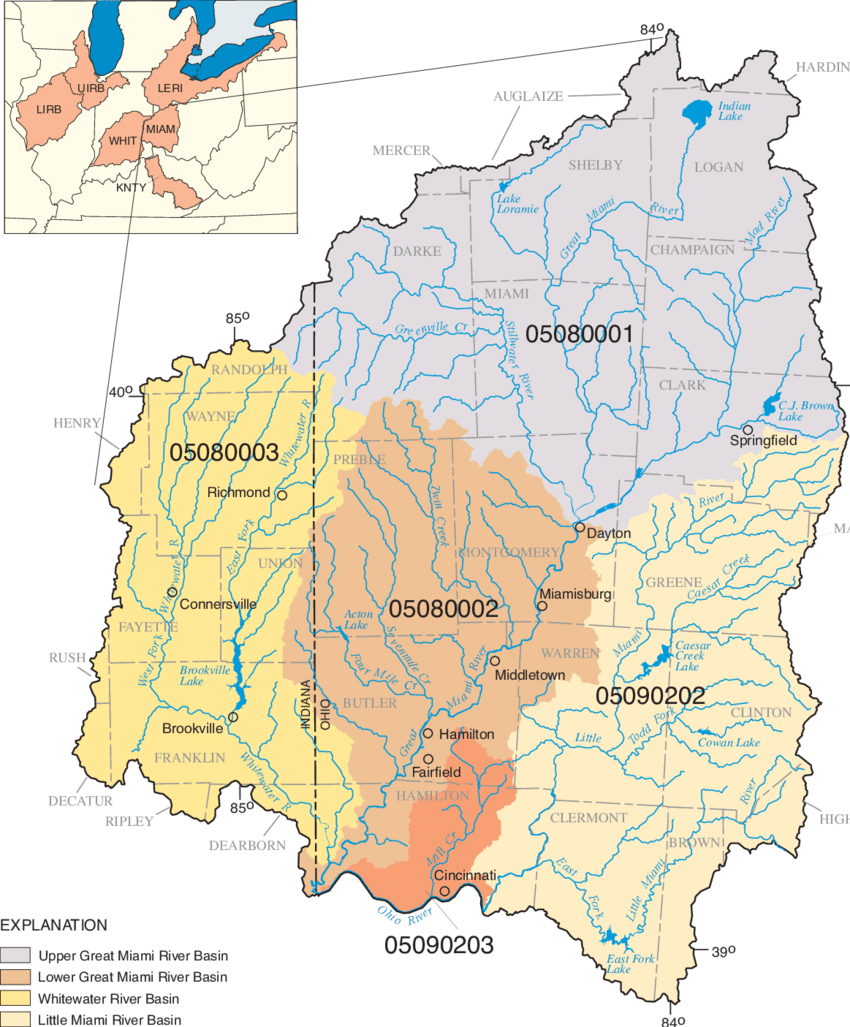
The Miami Watershed is in Southwest Ohio and Southeast Indiana and includes the Great Miami River Valley (left) and Little Miami River Valley (right).
As a local organization, we aim to connect to bioregional regeneration at multiple scales, through:
On-the-ground work in Yellow Springs and our region, the Miami Valley, which includes portions of the Great and Little Miami River Watershed;
Connecting regenerative initiatives throughout the region and Ohio;
Participation in conferences, education, and other media that promote bioregional regeneration as an important tool for repairing communities and the planet; and
Engaging with regional and national networks, including our Farmer Education Network, establishing a local Folk School, and partnering on Farmer-2-Farmer Skill Share projects, to help farmers, growers, herbalists, and other practitioners to connect and share resources.
Bioregional Initiatives
-

Farmer Education Network
We support regional farmer education through a network of partners. Our Regenerative Farmer Fellowship (RFF) is an agricultural initiative that supports beginning or current farmers who want to learn more about regenerative agriculture practices and how to grow their farming operations. Other educational offerings include Farmer-2-Farmer Skill Shares, conference hosting and participation, and a seed library and training on regionally adapting seeds in collaboration with Miami Valley Seed Commons.
-
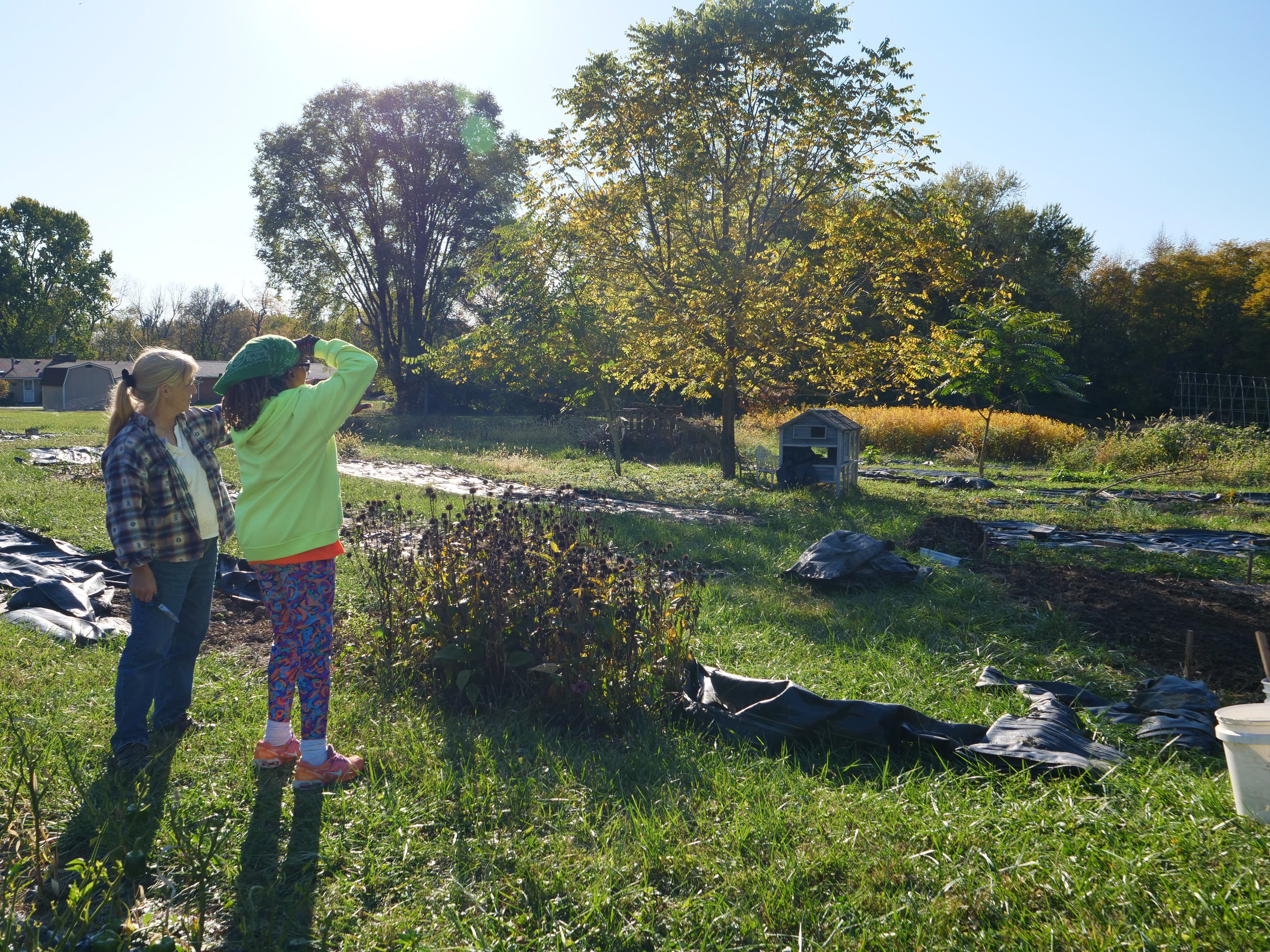
Melrose Acres Urban Agriculture Center
Agraria, working with Central State University Extension and Springfield Ohio Urban Plantfolk (aka SOUP), was awarded a grant to purchase eight acres in south Springfield in 2020. SOUP had been gardening there, and when it came up for sale, sought a way to preserve it to expand their work on food insecurity in south Springfield. Once purchased in 2021, SOUP renovated the house to use for workshop and classroom space and has continued to develop the property. SOUP is a black owned, women owned 501(c)3. Recognizing that everyone comes to food security from a variety of entry points, they provide programs that are broadly based and focused on its community’s priorities.
-
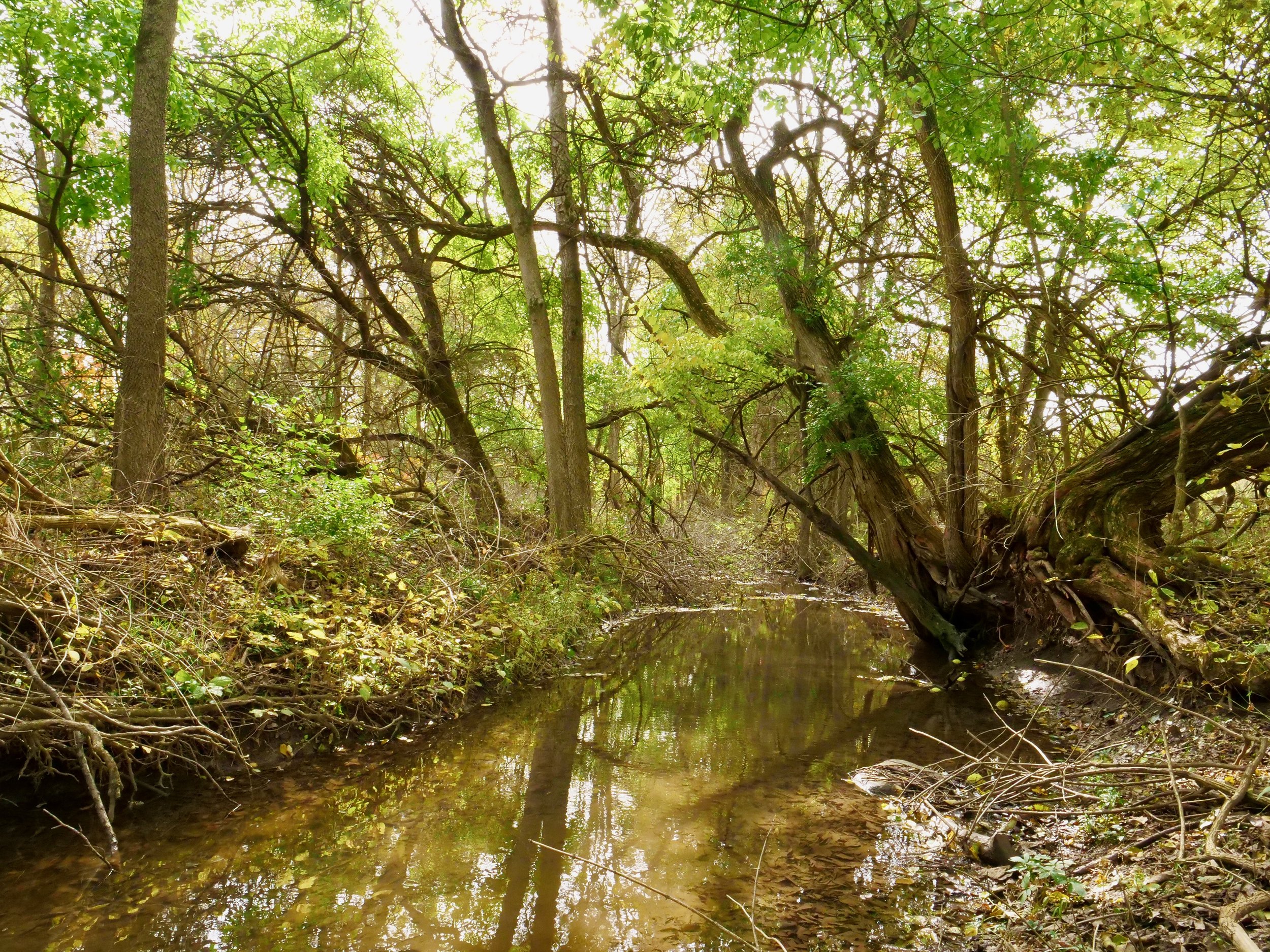
Jacoby Creek Partnership
Agraria is one of several partners in the Jacoby Partnership Project, an initiative launched in 2018 by the Yellow Springs, Ohio-based Tecumseh Land Trust. The goal was to improve soil and water quality and encourage conservation practices in two subwatersheds of the Little Miami River, which include both Jacoby and Yellow Springs creeks.
-
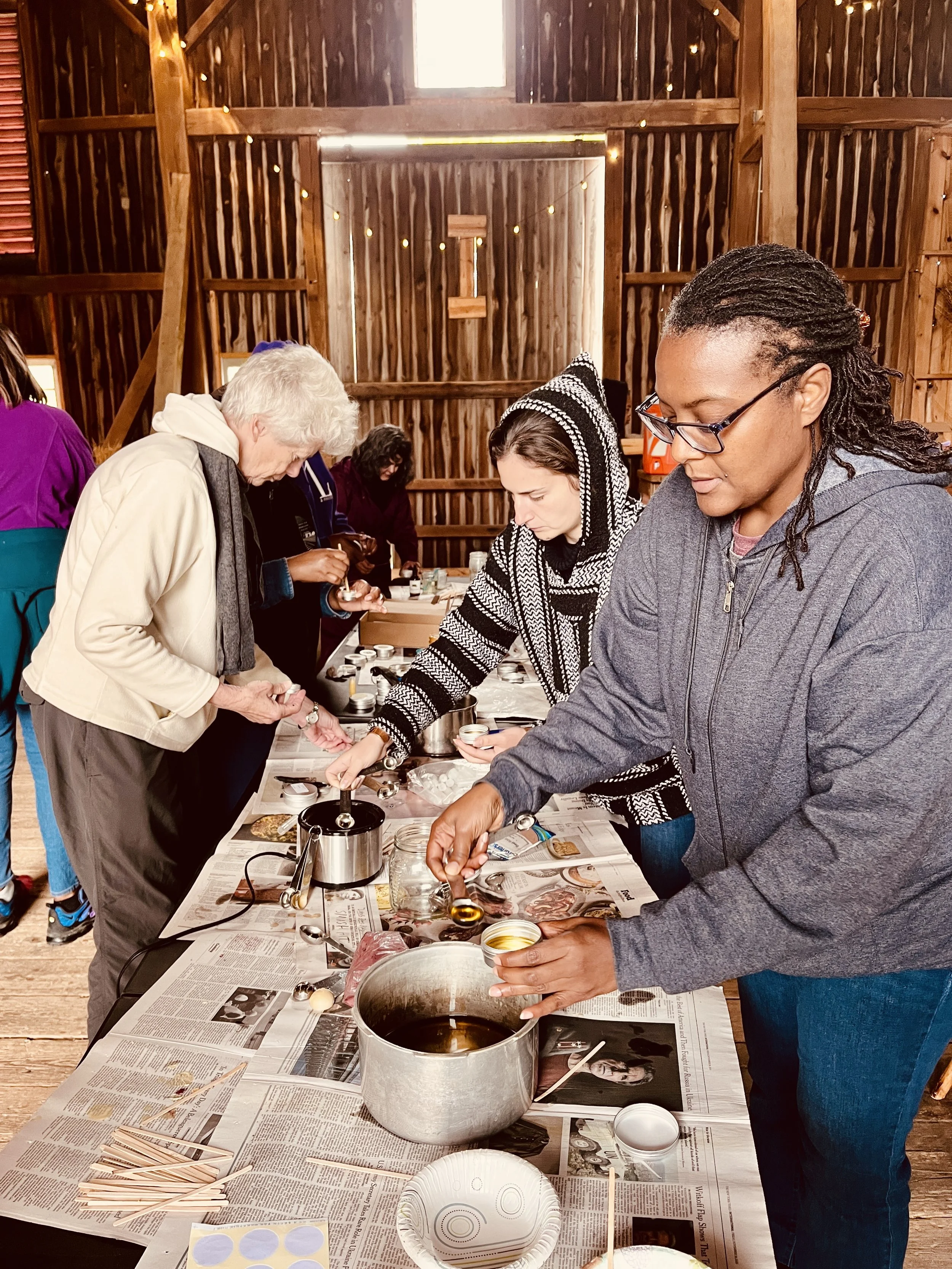
Agraria Folk School
Local practitioners and regional guest educators offer hands-on community-led learning opportunities in reskilling to preserve traditional practices and cultivate Local Ecological Knowledge (LEK). Workshops include topics like food preservation, herbal medicine, soap making, basket weaving, and permaculture design.
For more information about Bioregionalism and its philosophical roots, visit Planet Drum Foundation.
“Bioregion: a distinct area with coherent and interconnected plant and animal communities, and natural systems, often defined by a watershed. A bioregion is a whole “life-place” with unique requirements for human inhabitation so that it will not be disrupted and injured.”
“The bioregional perspective recreates a widely-shared sense of regional identity founded upon a renewed critical awareness of and respect for the integrity of our ecological communities.”
Other Bioregionalism organizations and links: